Participant Workbook
88 pages · 203 blank fillable fields · Printable PDF · Version 1
ISBN 978-1-7649646-3-0
Personal price: A$59.
Existing authorised reader PDF accessVersion 1
A focused programme for co-occurring mental health and substance-use recovery. Its 12 core sessions and eight reserve sessions provide four-page participant packets and matching four-page teaching units for suitably qualified facilitators.
Written by Dr Eric Hadinata MBBS BMedSci FRACGP FAChAM. Published by Dr Eric Hadinata.
88 pages · 203 blank fillable fields · Printable PDF · Version 1
ISBN 978-1-7649646-3-0
Personal price: A$59.
Existing authorised reader PDF access
94 pages · PDF · Version 1
ISBN 978-1-7649646-4-7
Included with the matching participant workbook in this programme's practitioner pack, from A$249 for one named practitioner.
Existing authorised reader PDF accessUse your personal library for individually licensed books, or the existing protected PDF links above if those are the access details provided to you. Opening a public book page does not itself grant a licence.
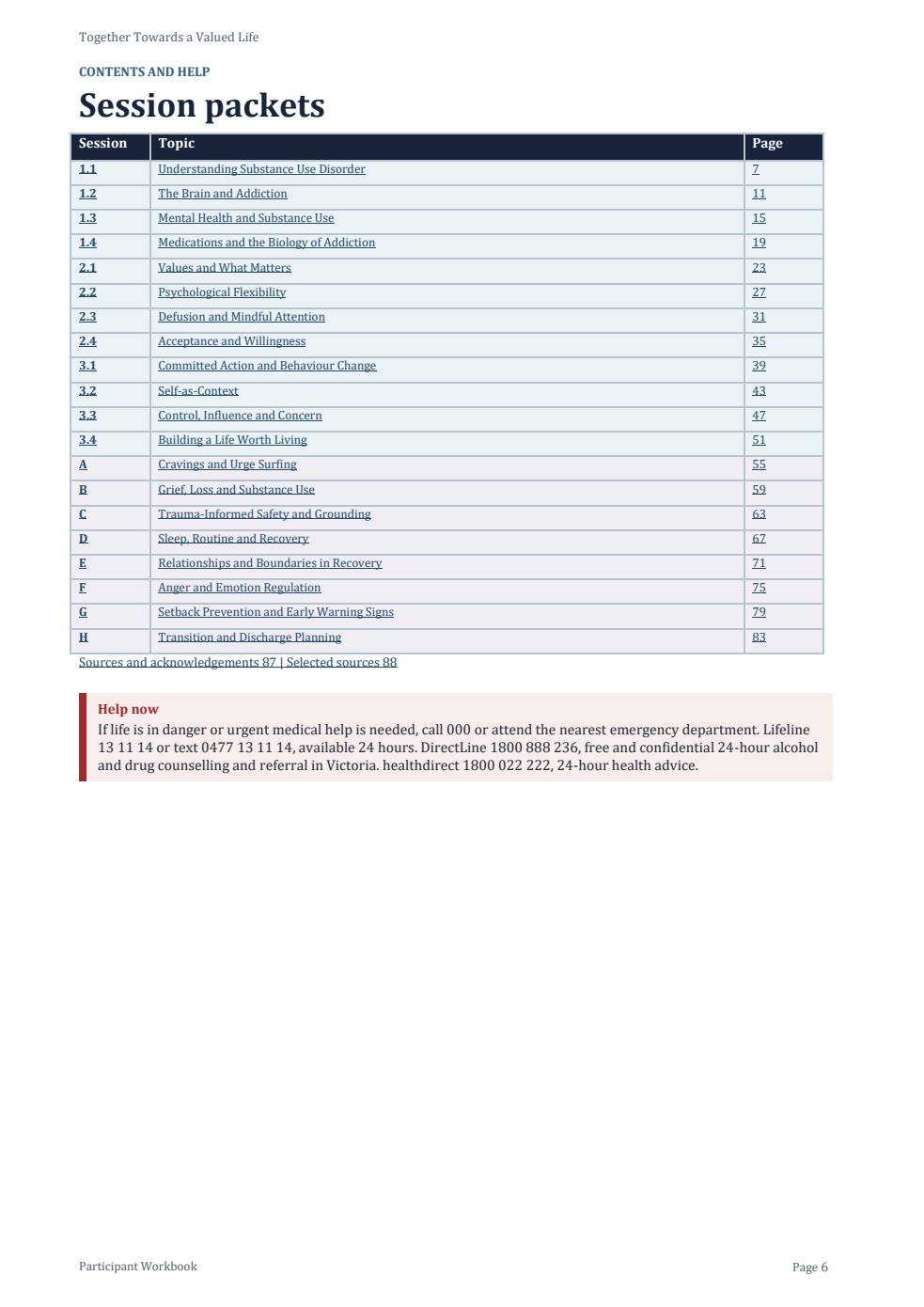
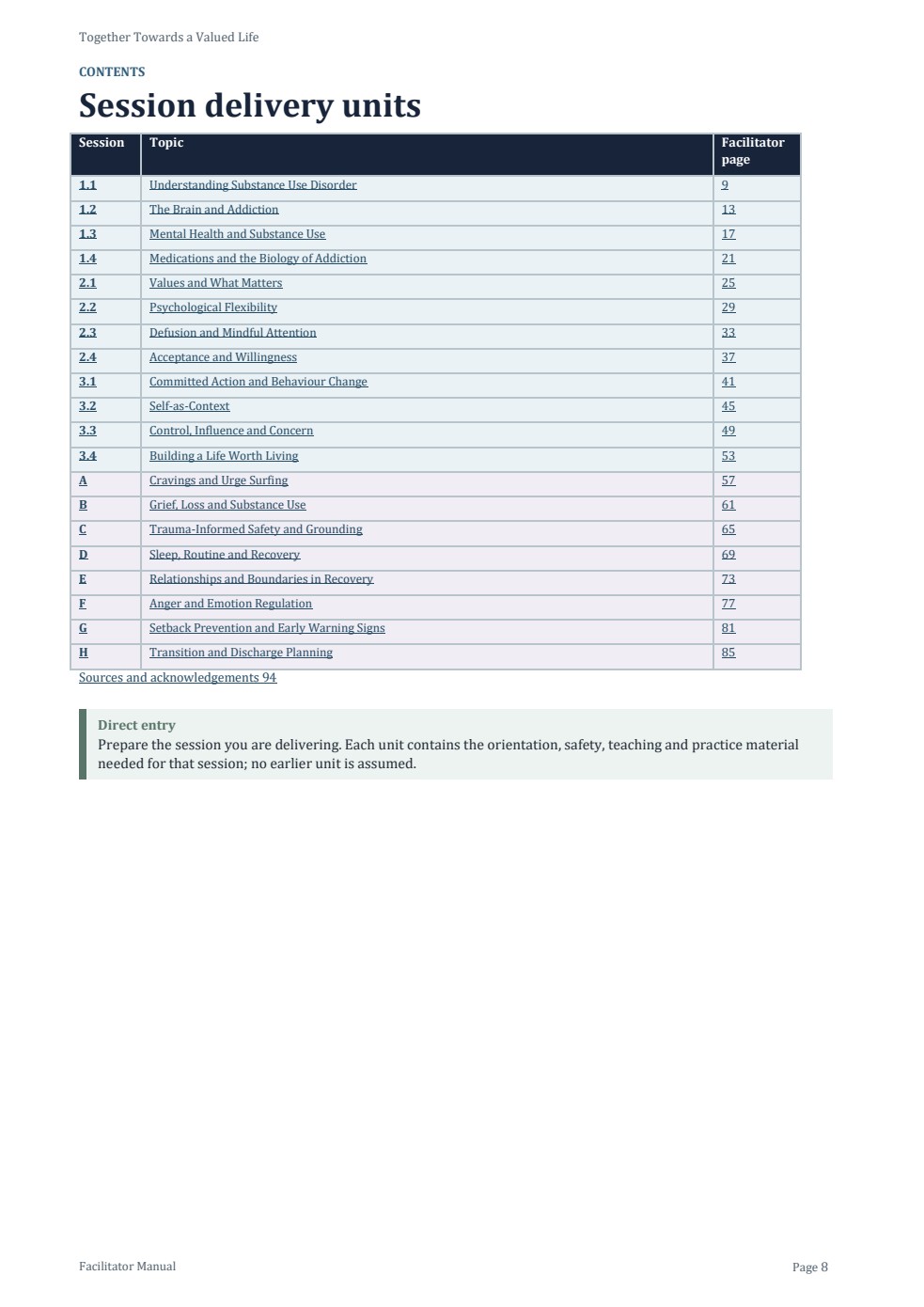
Explore the contents of each Version 1 book. Exercises and facilitator guidance are available in the full PDFs.
The programme in Dr Hadinata's inpatient care
The structured weekday programme runs for a full day, Monday to Friday, and combines group treatment with one-to-one therapy. Therapeutic care continues every day, including optional activities and medical reviews on weekends.
Dr Hadinata leads four groups during the weekday programme. These sessions are one part of the broader inpatient timetable, not the whole programme. His 12-session core repeats over a rolling three-week cycle. The wider inpatient Dual Diagnosis Program continues on Wednesday and over the weekend; it is only this group sequence that has no regular Wednesday session.
The medical team includes Addiction Medicine specialists, psychiatrists and a general physician. Other relevant specialists, such as a gastroenterologist, contribute when needed. The allied health team includes psychologists, a social worker, a dietitian, a physiotherapist and an exercise physiologist.
This describes Dr Hadinata's clinical programme, not services included in a book purchase or provided automatically by other facilitators. Read the clinical referral information and private fees, insurance and rebates information when considering inpatient care.
Final AUD prices · applicable tax included · no card surcharge
Book purchases are approval-only. Request permission through the bookshop before paying. If approved, you receive a single-use invitation for the selected books, bound to your verified email address.
Request a purchase or open your librarySign in with your own email address and a short-lived code to access your personal library. Each purchased personal licence includes the PDF and corresponding web access. Existing authorised readers can keep using the protected PDF links already provided to them.
One selected programme workbook for one named reader. Printable, fillable PDF and corresponding purchaser web access.
The programme's participant workbook and facilitator resource, personally assigned to one practitioner.
Organisation-owned capacity for up to four authorised practitioners, with replaceable staff seats.
Organisation-owned capacity for up to seven authorised practitioners, with replaceable staff seats.
Practice and organisation licences are available by individual arrangement, not through the online purchase invitation. For eight or more practitioners, contact Dr Hadinata for volume pricing. No fixed price is offered for this band.
Two practitioners may buy two personally assigned A$249 licences for A$498 in total. The A$699 practice licence instead belongs to the organisation, covers up to four authorised practitioners and allows the practice to reassign seats when staff change. It is a different ownership and capacity option, not a two-person discount.
Each practitioner pack contains the matching participant workbook and manual. For Walking a Purposeful Path, the professional resource is the combined workbook and facilitator manual. The independent Reader's Guide is A$62 separately, directly from Dr Hadinata and is excluded from every pack, practice licence, bundle, bonus and practice client-distribution grant.
Practice participant distribution is limited to a separately organisation-licensed participant PDF for the practice's own clients. It does not include facilitator manuals, staff login details or unlimited client web accounts. Purchaser web access is included.
Facilitator requests need complete registered-health-professional or registered-health-service details. Missing details are automatically declined before review; complete details do not establish verified registration or guarantee approval. A facilitator may request an A$59 participant workbook alone to evaluate the programme. This still requires approval and payment; it is not a free trial.
The same final AUD prices apply to all buyers, including applicable tax, with no extra tax or merchant card surcharge added at payment. Approved Australian purchases can use the online payment pathway. Overseas requests may need a tax review before payment; the correct tax is shown on the invoice.
A one-off licence covers the purchased Version 1, with no renewal fee or automatic expiry. Same-edition corrections are included. Future editions are not included. Web access is included, with fair notice and access arrangements if hosting later closes, not a promise of perpetual hosting.
We do not offer change-of-mind refunds. Your rights under the Australian Consumer Law are not affected.
Access messages come from noreply@dreric.net. Check junk or spam if a message is missing, and use Get help with book access rather than replying to publication emails.
Book purchase does not include a consultation, establish clinical suitability or guarantee an appointment. For treatment with Dr Hadinata, use the separate clinical referral pathway. These resources do not replace clinical assessment, treatment decisions or urgent care.
© 2026 Dr Eric Hadinata MBBS BMedSci FRACGP FAChAM. Published by Dr Eric Hadinata. Third-party sources retain their own rights.
All current books and therapeutic resources